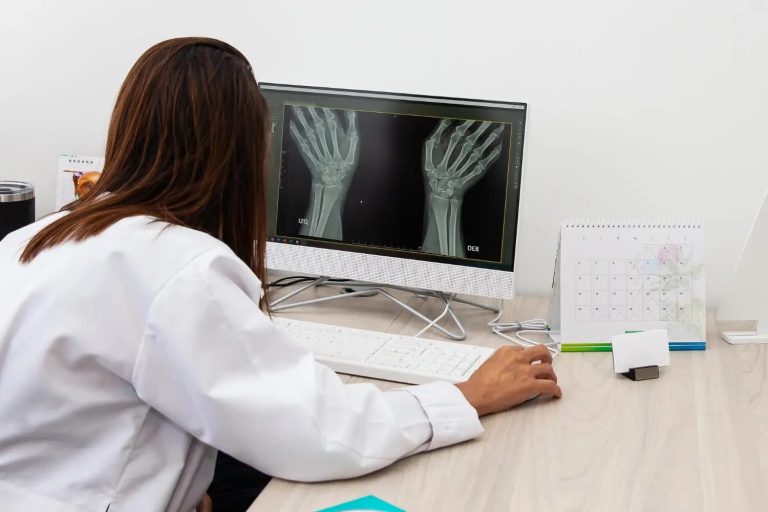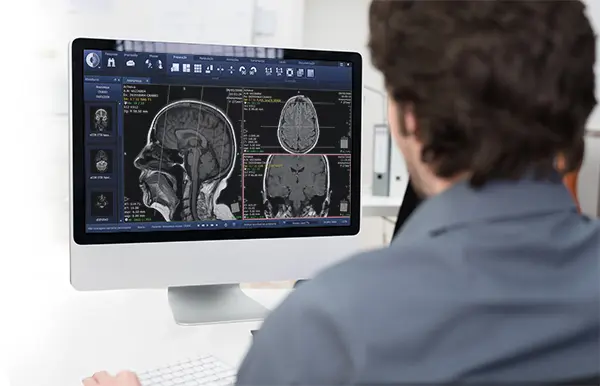



In diagnostic imaging centers, paper-based medical exam print management is an activity that, if not handled carefully, can be costly for institutions.
Although advances in digitalization allow results to be delivered online, many ordering physicians still expect patients to return to consultations with printed images. This causes radiology centers to face issues such as the high cost of printing supplies, the accumulation of uncollected documents, and the management of physical storage space for these exams.
These factors overload operations, consume resources, and make process standardization more difficult. In this scenario, it is essential to rethink the current printing model, seeking solutions that are more efficient, economical, and aligned with the sector’s new demands.
In this article, understand why printing medical exams on paper is a challenge in diagnostic centers and learn about Pixeon PixPrint—the ideal tool to support this process. Explore it!
Why paper-based medical exam printing is a challenge for diagnostic centers
In diagnostic imaging centers, printing medical exams on paper is still a common practice, but it has become increasingly challenging.
In addition to generating high costs, this routine directly impacts operations and the sustainability of institutions. Understand the main obstacles of this practice—and why it is time to review this process.
Costs for printing materials and supplies
Even at scale, the use of paper, toner, radiology films, and printer maintenance represents recurring expenses. The high frequency of exams increases this cost over time.
Dependence on these materials is subject to price fluctuations and supply issues. All of this compromises the institution’s budget and reduces the margin for efficiency.
Physical space occupied by uncollected exams
Many printed exams are not collected by patients, piling up in units and requiring storage space.
This situation results in expenses with furniture, organization, and, in some cases, proper disposal. The logistics of controlling these materials also consumes team time.
The result is an overloaded and less efficient environment.
Specific demands from ordering physicians
Despite digital advances, some professionals still prefer—or require—printed exams, due to habit or limited resources in their practices, forcing diagnostic centers to maintain active printing structures just to meet these exceptions.
This occasional—but frequent—need creates operational imbalances and makes it harder to standardize activities digitally.
On-demand medical exam printing: a viable and efficient alternative
With the advancement of digitalization in diagnostic centers, adopting on-demand printing emerges as an alternative that meets ordering physicians’ demand while maintaining the institution’s operational efficiency. Instead of eliminating paper entirely, this strategy offers a more conscious and controlled way to handle exams.
This model optimizes resources and sustains excellence in care for different profiles of patients and physicians.
Reduced costs from unnecessary printing
With on-demand printing, exams are printed only when truly requested by the patient or physician, preventing the common waste of materials on exams that would never be collected.
The diagnostic center reduces expenses with paper, toner, and films. The measure also supports more sustainable practices aligned with precise management.
More control over print flow and pickup
It enables more accurate mapping of requests and real demand for printing. This makes it possible to better organize workflow, forecast deliveries, and prevent the accumulation of exams at reception desks or archives.
Operations gain agility and organization, free up physical space for other uses, and minimize bottlenecks in staff routines.
Supporting physicians without compromising operations
On-demand printing of radiology exams ensures that physicians who still prefer physical exams are served without negatively impacting the budget.
Flexibility maintains professionals’ satisfaction without keeping printing structures unnecessarily active at all times.
This balances tradition and innovation in the institution’s routine, resulting in a smarter and more adaptable operation.
Meet Pixeon PixPrint, an on-demand print server
PixPrint is a DICOM print server that connects workstations and devices such as Ultrasound, X-ray, Tomography, MRI, and Nuclear Medicine, facilitating the management of printing radiology exams on paper or film.
With customized routing rules, it makes workflow more agile. The ability to replace film with paper can reduce costs by up to 65% without compromising image quality.
The system also generates reports and enables reprints, centralizing the institution’s print management.
How PixPrint works in practice
PixPrint operates on demand—meaning printing occurs only when there is a request.
The tool receives images from DICOM-compatible equipment and applies predefined rules for layout, image brightness and contrast, and print destination.
These rules define how and where each exam will be printed, whether on paper or film. As a result, supply waste is avoided and control over the process improves.
Benefits for diagnostic centers
On-demand printing reduces the consumption of film, paper, and toner, delivering savings and freeing up physical space.
Another advantage is that physicians and patients receive only the exams they actually need. In addition, the team gains efficiency and the institution gains greater operational control.
About Pixeon
Pixeon is the company with the largest software portfolio for the healthcare market.
Our solutions serve hospitals, clinics, laboratories, and diagnostic imaging centers, covering both management (HIS, CIS, RIS, and LIS) and diagnostic processes (PACS and Laboratory Interface), ensuring high performance and top-tier management in healthcare institutions.
The HIS/CIS software for hospitals and clinics, Pixeon Smart, is a complete solution that integrates the entire institution into a single system. It is also certified with the highest level of digital maturity by SBIS (Brazilian Society of Health Informatics).
We already have over 3,000 clients in Brazil, Argentina, Uruguay, and Colombia, serving millions of patients annually through our platforms.
Want to know if Pixeon’s technologies offer everything you’ve always wanted for your hospital or clinic?
Request a commercial consultation and be amazed by everything our management system can provide!